
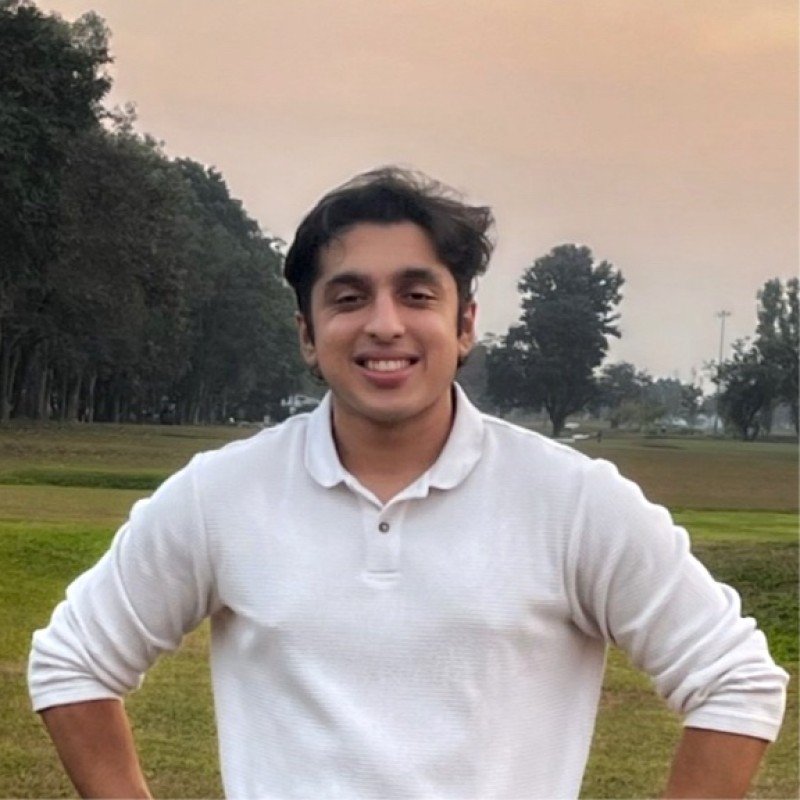
Suraj Ranganath
Hello 👋
I like to build and do research. Right now, I am working on building and orchestrating agents, AI security, reinforcement learning, EEG tooling, model evals, world-model memory, and data systems.
M.S. Data Science at UCSD. Previously, I helped build BalkanID Copilot and the Identity Intelligence Graph into production products used by enterprise customers. This summer, I helped launch C1 Vault at C1.ai in San Francisco, CA.
I'm open to new roles, collaborations, and opportunities. Feel free to reach out at [email protected].
selected work
-
C1 Vault post-quantum credential vault for AI agents, from scratch to launch
Agents need access to systems without carrying the secrets that unlock them. I built C1 Vault from scratch through launch with a small core team, using Messaging Layer Security (MLS). I built egress proxies that inject credentials outside agent context, with scoped, short-lived access, rotation, and decoys to detect leaks. My work also covered the Tauri desktop app, CLI, and platform governance workflows, with support for zero trust deployment.
agentscredential securityMLSTauri -
BalkanID Copilot production AI agent for identity security over enterprise identity graphs
Identity teams have to reason over messy access data: users, apps, roles, groups, exceptions, and stale permissions. If an AI system gets that wrong, it creates security risk instead of saving time. I helped build Copilot around the Identity Intelligence Graph, so natural-language questions could become permission-aware graph queries, reports, and guarded actions. It shipped into enterprise workflows, supported customer adoption and revenue, and became part of the patent work around agentic identity security.
agentsknowledge graphsIAMMCP -
Show, Don’t TELL explainable AI-generated text detection with evidence spans
AI-text detection is too consequential to be a black-box score, especially when students and writers are the ones being judged. I worked on a detection interface that points to the specific spans behind a decision, so the output can be inspected instead of blindly trusted. That makes the detector easier to argue with, which is the whole point if these tools are going to be used around real people.
interpretabilitydetectionevidence spans -
StealthRL fairness-aware RL red-team loop for AI-text detectors
AI-text detectors can fail in ways that matter for fairness, especially for people whose writing already gets treated as suspicious. I built StealthRL to stress-test that failure mode with reinforcement learning instead of one-off prompt tricks: train a paraphrase policy, preserve the meaning, and measure whether the attack transfers. The project turned a vague concern about detector robustness into a reproducible red-team system with a paper, demo, and public code.
AI safetyGRPOLoRAfairness -
EEGPrep Python port of EEGLAB, the popular toolbox widely used by EEG researchers
EEG researchers have years of workflows built around EEGLAB, but the center of gravity for scientific tooling has moved toward Python. I contributed to EEGPrep at the Swartz Center, helping port familiar EEGLAB-style workflows into a Python package without making researchers relearn everything from scratch. The work is open-source and practical: lower migration cost, better Python interoperability, and tooling that respects how EEG research is actually done. Arnaud Delorme's LinkedIn recommendation adds more context on my work there.
open sourceEEGPythonresearch tooling -
NAMO and NAMO-D in Marin implemented two new optimizers for foundation models in Marin, mentored by Al Merose
Foundation-model training lives or dies on boring-seeming systems details: optimizer behavior, reproducibility, and clean integration with the training stack. Mentored by Al Merose, I implemented NAMO and NAMO-D support in Marin so researchers could try those optimizers inside a real open-source training codebase instead of a standalone experiment. The PR landed with tests and gave Marin first-class support for both optimizers.
open sourceoptimizersJAXMarin -
KV Cache Quantization for Self-Forcing Autoregressive Video Generation 33-method study for self-forcing autoregressive video generation
Long video generation is expensive because the model has to keep memory around while the sequence grows. I studied KV-cache compression for self-forcing autoregressive video generation across a broad set of methods, measuring whether the savings were worth the drift and quality tradeoffs. The paper gives a practical map of where low-bit cache policies can reduce memory pressure without quietly breaking the generated video.
world modelsvideo diffusionquantizationsystems -
PIPE-Cypher automatic enterprise benchmark generation for Text-to-Cypher systems
Text-to-Cypher systems are hard to evaluate in enterprise settings because public benchmarks do not resemble a company's own graph, data, or governance rules. I built PIPE-Cypher to turn a live property graph into an executable NL-to-Cypher benchmark while keeping private schema and values local. It turns benchmark creation from a hand-written chore into a repeatable evaluation pipeline, with thousands of accepted examples and downstream model comparisons in the paper.
Text-to-Cypherproperty graphsbenchmarkslocal LLMs -
TrailKarma offline-first trail intelligence app with BLE relay and on-device ML
Trails are exactly where useful local information matters and cell service disappears. At UCSD DataHacks, we built TrailKarma as an offline-first app where hikers can pass hazards, water reports, wildlife sightings, and delayed messages phone-to-phone until someone gets signal. I worked on the Android/BLE side and sync logic, and the project won hackathon awards because the demo solved a real no-signal problem.
AndroidBLEDatabricksoffline-first -
Multimodal Learning Analytics Dataset paper with EEG, eye tracking, GSR, video, and spatial reasoning data
Standard grading misses a lot of student thinking, especially when the final answer is wrong but the reasoning is close. At IIT Bombay EdTech Lab, I worked on a multimodal learning-analytics dataset for mental rotation tasks, combining behavioral, physiological, interview, and task signals. The work became a Nature Scientific Data paper and shaped the education thread I keep returning to: using data to see how students think before reducing them to a score.
paperlearning analyticsmultimodal data -
VaultLens Telegram personal knowledge-base agent for memory, deadlines, digests, and calendar-aware context
Personal knowledge tools often fail because they ask for too much upkeep. VaultLens is my attempt at a lighter version: capture thoughts in Telegram, let an agent organize the context, and bring back the useful pieces when deadlines, reminders, or decisions come up. It is a small build, but it shows the kind of agent interface I care about: close to an existing habit and useful without becoming another dashboard.
agentspersonal knowledgeTelegramcontext systems -
Where Bits Matter in World Model Planning mixed-bit world-model planning study showing where low precision breaks
Efficient world models are only useful if compression does not destroy planning. In this study, I tested mixed-bit quantization around DINO-WM to see where precision matters most for spatial reasoning. The result was a clearer picture of the transition zone: some low-bit settings stay close to full precision, while the wrong allocation can break planning even at the same overall budget.
DINO-WMplanningmixed-bit -
PIPE-RDF LLM-assisted pipeline for enterprise RDF benchmark generation
Enterprise knowledge-graph QA has the same evaluation problem across formats: public datasets rarely match the schema people actually use. PIPE-RDF tackles that for RDF/SPARQL by generating schema-specific question-query pairs and checking that they execute. That makes the benchmark useful for real KGQA evaluation, not just another cleaned-up public toy dataset.
RDFSPARQLbenchmarkingLLMs
timeline
- Jun 2026 - Sep 2026
- Apr 2026 - Jun 2026Swartz Center for Computational Neuroscience, UC San Diegograduate software engineer with Dr. Arnaud Delorme; porting EEGLAB workflows from MATLAB to Python with attention to parity, numerical accuracy, GUI, and UX
- Jan 2026 - Apr 2026Halıcıoğlu Data Science Institute, UC San Diegograduate software engineer with Dr. Victor Minces; built M-Flow, a browser-based flow programming tool for learning coding through music
- Jan 2026 - Feb 2026Qualcomm Institute, UC San DiegoAI research program mentor; helped undergraduates with ML fundamentals, experiment design, evaluation, and interpretation
- Sep 2025 - Jan 2027UC San DiegoM.S. Data Science; GPA 4.0/4.0
- May 2023 - Jun 2025BalkanIDmachine learning intern to machine learning engineer; Copilot, Identity Intelligence Graph, evals, connectors, and patent work
- Jan 2023 - Jun 2023IIT Bombay, EdTech Labresearch intern; multimodal learning analytics with EEG, eye tracking, GSR, video, interviews, and spatial reasoning data
- Jun 2022 - Sep 2022Strive Math, YC S21entrepreneur in residence intern; strategy, curriculum, and a recruitment system for 1200+ applications
- Jul 2022 - Aug 2022MySivi, YC W22machine learning intern; T5 grammar correction for Indian English, released to 50,000+ users
- Jan 2022 - Feb 2023Becoming I Foundation, VIT chapterchairperson; led 200+ student volunteers teaching 300+ children across 8 centers
- Jul 2021 - Aug 2021Cisco ThingQbator RVCEsoftware engineering intern; Flutter and Firebase work on Serenity, a mental-health assistant that secured Rs 5 lakh in seed funding
- Aug 2020 - May 2024Vellore Institute of TechnologyB.Tech. Computer Science with specialization in Bioinformatics; GPA 3.98/4.0, top 5 in program, program representative, merit scholarships in AY 2022-23 and 2023-24
- Jul 2018 - Jan 2019Cisco Talent Outreach Programbuilt Solan, a web app for crowdsourced question-bank creation, with a small student team
- 2008 - 2020Sri Kumaran Children's Home CBSEPCM with computer science; Head Boy, House Vice Captain, Class 12: 96.4%, Class 10: 95%, Best in Academics - Science, Change Maker Award
github
suraj-ranganathUS patents
google patents- 2025
- 2026Recommendation and Remediation of Role-Based Access Control Postures for Identitiespublished US20260141091A1
- 2025Multi-Agent Identity Governance and Administration Systempublished US20250343795A1
- 2025
research
google scholar- 2026Show, Don’t TELL: Explainable AI-Generated Text DetectionAI-text detection, evidence spans, interpretability
- 2026KV Cache Quantization for Self-Forcing Video Generation: A 33-Method Empirical Studyself-forcing autoregressive video generation, KV-cache compression
- 2026StealthRL: Reinforcement Learning Paraphrase Attacks for Multi-Detector Evasion of AI-Text DetectorsAI safety, detector robustness, adversarial paraphrasing
- 2026EEGPrep: a validated Python implementation of the EEGLAB preprocessing pipelineEEG preprocessing, Python, EEGLAB, numerical validation
- 2026AI-powered malware intelligence: a review of machine and deep learning paradigms in detection and classificationArtificial Intelligence Review; malware detection, deep learning, robustness
- 2026PIPE-RDF: An LLM-Assisted Pipeline for Enterprise RDF Benchmarkingknowledge graphs, RDF, benchmark construction
- 2026PIPE-Cypher: Automatic Enterprise Benchmark Generation for Text-to-Cypher SystemsText-to-Cypher, enterprise property graphs, benchmark generation
- 2026Where Bits Matter in World Model Planning: A Paired Mixed-Bit Study for Efficient Spatial Reasoningworld models, spatial reasoning, quantization
- 2025A Multimodal Dataset of South Asian Post-Graduate Students Working on Mental Rotation Taskspaper; EEG, eye tracking, GSR, video, and learning analytics